
Manufactured Housing with Keith Darin – November 2026
November 16, 2026
Manufactured Housing Outlook 2026: Strong Occupancy, Rent Growth, and Investment Opportunities
On the Spot with Steve Williams and Keith Darin
Capright’s Keith Darin discusses manufactured housing market performance, affordability challenges, investment activity, and the outlook for the sector.
The U.S. manufactured housing sector continues to demonstrate resilience in 2026, supported by strong occupancy rates, steady rent growth, and limited new supply. As the nation faces an ongoing affordable housing shortage, manufactured housing remains an important housing alternative and an attractive asset class for real estate investors.
In the latest episode of Capright’s On the Spot podcast, host Steve Williams sits down with Keith Darin to discuss the performance of the manufactured housing sector, the impact of higher interest rates, and the investment outlook for the remainder of 2026 and beyond.
Manufactured Housing Performance Remains Strong in 2026
Manufactured housing communities continue to deliver solid operating fundamentals despite broader economic uncertainty.
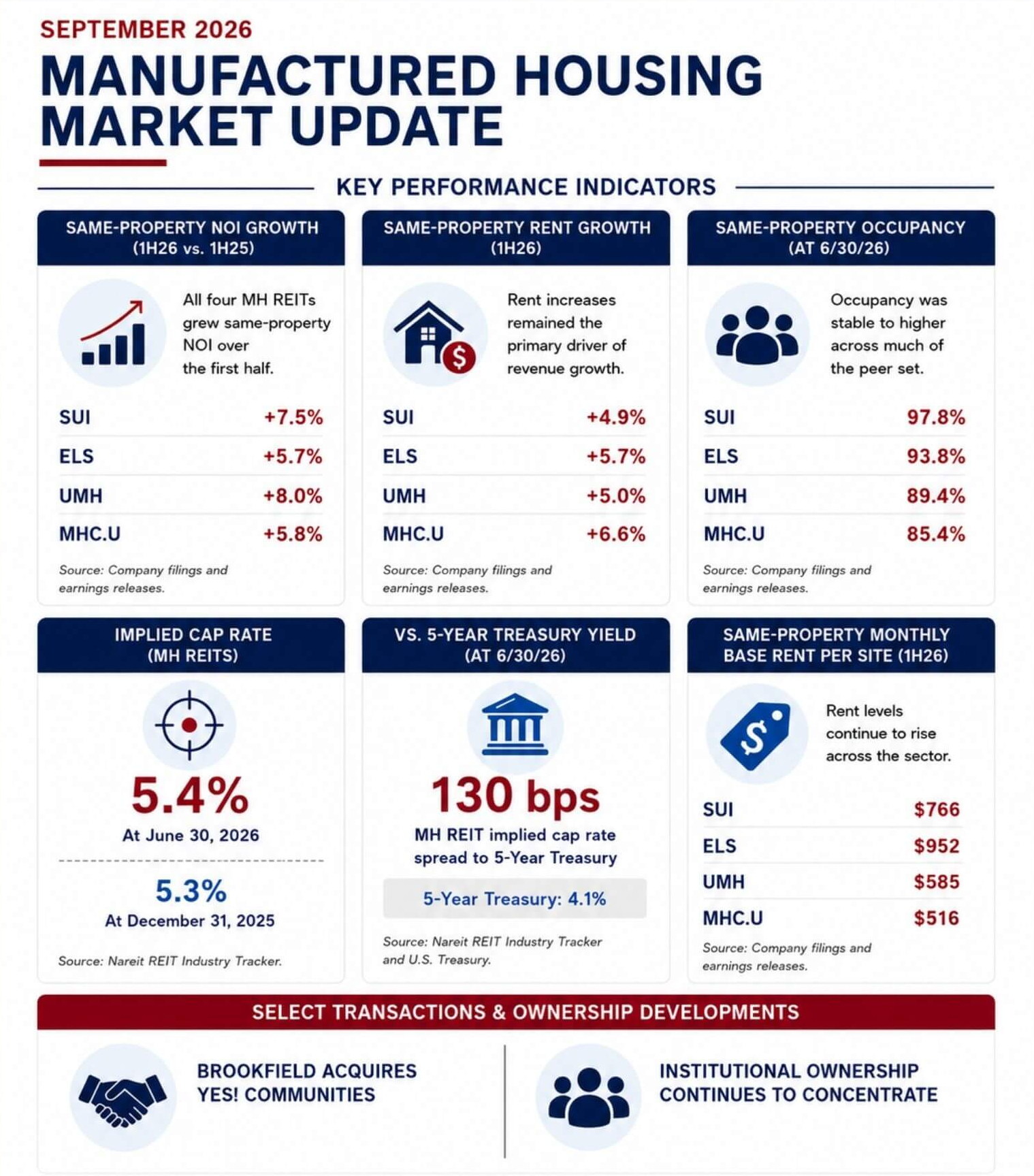
According to Keith, national occupancy rates remain in the mid-95% range, while average rent growth is approximately 6%. These metrics highlight the sector’s continued strength and ability to maintain demand in a challenging housing market.
Strong occupancy and rent growth reflect the ongoing need for affordable housing alternatives, particularly as traditional homeownership becomes increasingly expensive for many Americans.
Affordable Housing Shortage Supports Long-Term Demand
The persistent shortage of affordable housing across the United States continues to support demand for manufactured housing communities.
Manufactured homes offer a more affordable alternative to traditional site-built housing, making them an important component of the nation’s housing supply.
However, higher interest rates present challenges for prospective residents. As financing costs increase, purchasing a manufactured home becomes more expensive, potentially limiting the pool of qualified buyers and affecting near-term demand for manufactured housing lots.
While these financing constraints may create some short-term pressure, the underlying need for affordable housing continues to support the sector’s long-term outlook.
Limited New Supply Supports Occupancy Levels
One of the manufactured housing sector’s key advantages is its limited new supply.
New manufactured housing community development remains relatively low, helping existing communities maintain strong occupancy levels. With few new properties entering the market, established communities are positioned to benefit from continued housing demand.
Keith expects these supply constraints to help support occupancy rates over the near to medium term, even as higher financing costs create challenges for some prospective residents.
Manufactured Housing Investment Activity in 2026
Manufactured housing remains an attractive investment option for both private and institutional investors, although transaction activity has moderated slightly.
According to Keith, transaction volume in 2026 has remained relatively steady but is running somewhat below 2025 levels.
Buyers and sellers are taking a more cautious approach to acquisitions, reflecting broader trends across the CRE market. Investors are increasingly focused on targeted acquisitions of high-quality manufactured housing communities rather than pursuing transactions indiscriminately.
Despite this more selective investment environment, the sector’s strong operating fundamentals, limited supply, and long-term housing demand continue to support investor interest.
Manufactured Housing Market Outlook: What Lies Ahead?
The outlook for manufactured housing remains positive as the sector enters the final months of 2026.
Strong occupancy, continued rent growth, and limited new development provide a favorable foundation for future performance. While elevated interest rates and cautious investor sentiment may influence near-term activity, the nation’s ongoing affordable housing shortage remains a significant long-term demand driver.
For investors, the focus will likely remain on identifying well-positioned communities with strong operating fundamentals and sustainable growth potential.
As Keith explains, manufactured housing continues to offer compelling opportunities for private and institutional investors seeking exposure to an established residential real estate asset class.
For a full breakdown of the latest trends and insights, check out our Manufactured Housing Market Update:
Please enter your email to download the report
📬 Let’s Talk
At Capright, we are uniquely positioned to support institutional investors, operators, and developers navigating this evolving environment. As an independent valuation and advisory firm, we provide clarity, accuracy, and confidence, especially where the stakes are highest.


Non-Executive Director
📧 [email protected]
🔗 Connect on LinkedIn