Data Centers with Steve Lore – October 2026
October 21, 2026
Data Center Growth Shows No Signs of Slowing: Capright’s Steve Lore Discusses Power Constraints, Investor Risks, and Emerging Markets
On the Spot with Steve Williams and Steve Lore
Capright’s latest On the Spot podcast explores the forces shaping the U.S. data center market, from surging demand and power availability to community opposition and evolving tenant credit risks.
The data center industry continues to attract significant investment as AI, cloud computing, and digital infrastructure expansion drive demand for capacity. However, rapid development is introducing new challenges for investors, developers, and property owners.
In the latest episode of Capright’s On the Spot podcast, host Steve Williams sits down with Steve Lore, to discuss the evolving data center real estate landscape and what investors should be watching as the industry moves toward year-end.
Their conversation highlights three critical trends: growing community resistance to new developments, increasing scrutiny of hyperscale tenant creditworthiness, and the emergence of new data center markets driven by access to reliable power.
Community Opposition Creates New Challenges for Data Center Development
As data center development accelerates across the United States and internationally, local opposition is becoming an increasingly important consideration.
Concerns surrounding electricity consumption, infrastructure demands, and the impact of large-scale developments on surrounding communities have fueled growing resistance to proposed projects.
“Nimbyism is starting to put the brakes on some projects throughout the U.S. and even across the world,” Lore explains. However, he emphasizes that these challenges have not significantly slowed the industry’s overall expansion.
For data center investors and developers, this evolving environment underscores the importance of evaluating local regulatory conditions, community sentiment, and development feasibility when considering new investments.
While individual projects may encounter delays or opposition, the broader demand for data center infrastructure remains a powerful force supporting industry growth.
Oracle’s Credit Concerns Highlight the Importance of Tenant Risk
Another topic addressed in the episode is the growing attention surrounding Oracle’s aggressive investment in data center infrastructure and the implications of its credit profile.
As hyperscale technology companies commit substantial capital to expanding their AI and cloud computing capabilities, debt markets are beginning to scrutinize the financial implications of these investments.
Lore notes that Oracle’s investment activity has raised concerns among debt investors, but cautions against interpreting those concerns as evidence of a broader industry trend.
From a CRE valuation perspective, changes in tenant creditworthiness can influence leasing economics and investor underwriting assumptions.
Higher perceived credit risk may translate into higher rental rates or different lease terms as property owners seek compensation for additional exposure.
Nevertheless, Lore emphasizes that Oracle remains an attractive tenant for data center property owners.
The discussion illustrates why tenant credit quality, lease structure, and long-term financial commitments remain important considerations in data center real estate valuation, even as demand for space continues to grow.
Power Availability Is Reshaping the U.S. Data Center Development Map
Perhaps the most significant theme of the conversation is the industry’s increasingly power-driven development strategy.
As AI workloads and cloud infrastructure requirements expand, access to sufficient electrical capacity has become one of the defining factors influencing data center site selection.
“Power is king. Where you have power, you’ll get a data center,” Lore explains.
Historically, Northern Virginia has served as a dominant hub for U.S. data center development. However, growing power constraints and infrastructure challenges are encouraging major operators to explore opportunities in alternative markets.
Lore points to Digital Realty and Equinix, two prominent data center REITs followed in Capright’s research, as examples of companies expanding their development strategies beyond traditional locations.
Markets such as Charlotte, Atlanta, and Chicago are emerging as increasingly important destinations for data center investment and development.
This geographic diversification reflects a broader shift toward a power-first development strategy, in which access to electrical infrastructure can take precedence over traditional location considerations.
For investors, the implications extend beyond site selection. Power availability can influence development timelines, construction feasibility, operating costs, and ultimately property values.
As competition for electricity capacity intensifies, markets capable of supporting large-scale data center operations may become increasingly attractive to institutional investors and developers.
What Should Data Center Investors Watch Next?
Despite challenges involving community opposition, tenant credit exposure, and infrastructure constraints, the fundamental drivers supporting data center demand remain strong.
The latest On the Spot discussion highlights several considerations for investors evaluating opportunities in this rapidly evolving property sector:
- Power infrastructure: Access to reliable electricity is increasingly determining where new data center projects can move forward.
- Emerging markets: Secondary and expanding data center markets may offer new development and investment opportunities.
- Tenant creditworthiness: Significant capital commitments by hyperscale operators reinforce the importance of evaluating tenant financial strength.
- Development risks: Community opposition and local approval processes can influence project feasibility and delivery timelines.
- Valuation implications: Changes in market dynamics, leasing economics, and tenant risk can affect data center asset valuations.
As the industry approaches year-end, investors will be watching how these factors influence new construction, leasing activity, and capital deployment.
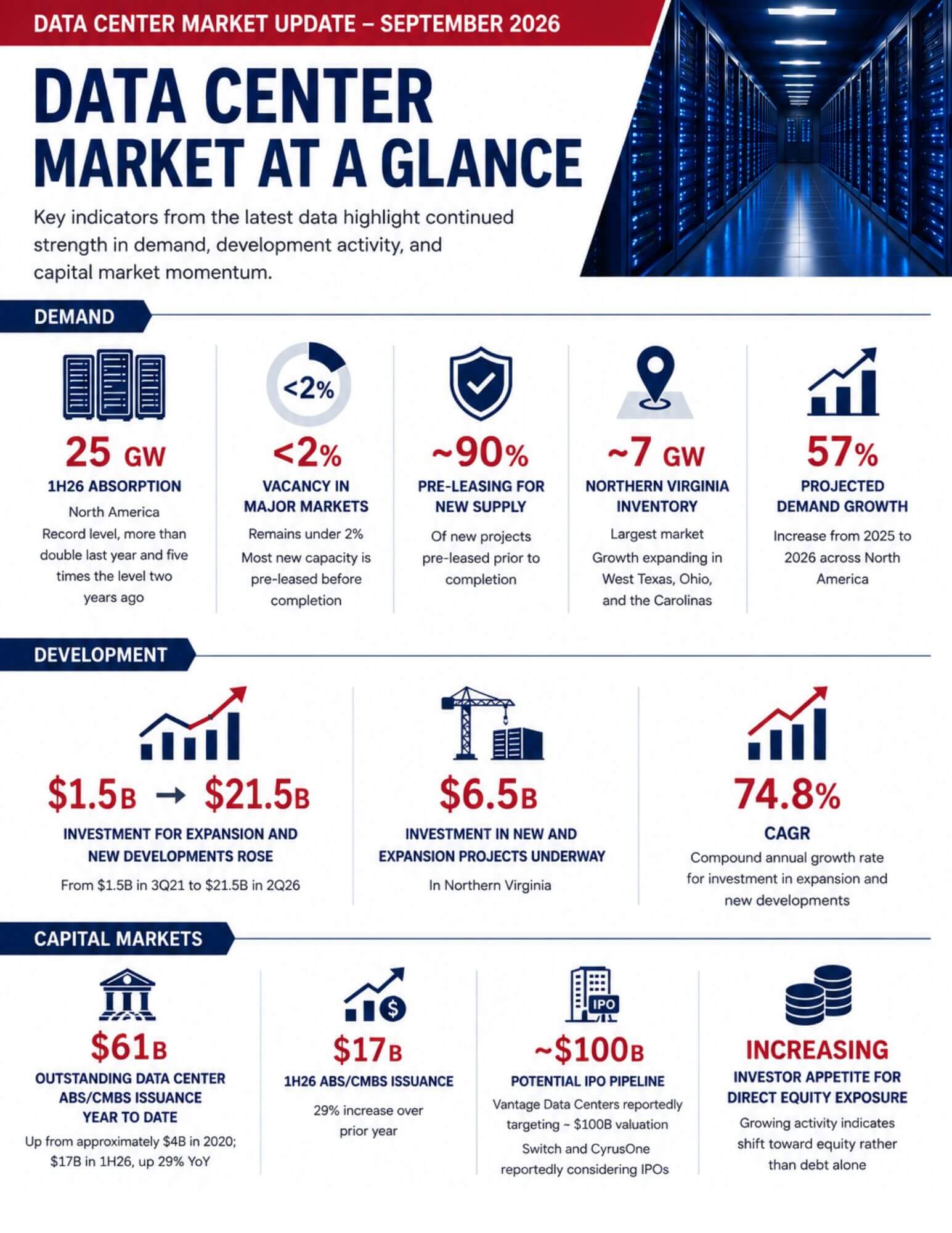
For a full breakdown of the latest trends and insights, check out our Data Center Market Update:
Please enter your email to download the report
📬 Let’s Talk
At Capright, we are uniquely positioned to support institutional investors, operators, and developers navigating this evolving environment. As an independent valuation and advisory firm, we provide clarity, accuracy, and confidence, especially where the stakes are highest.

Director
📧 [email protected]
🔗 Connect on LinkedIn

Non-Executive Director
📧 [email protected]
🔗 Connect on LinkedIn